Nurturing Young Minds: Early Childhood Education and Primary Schools in Remote Tribal Settlements
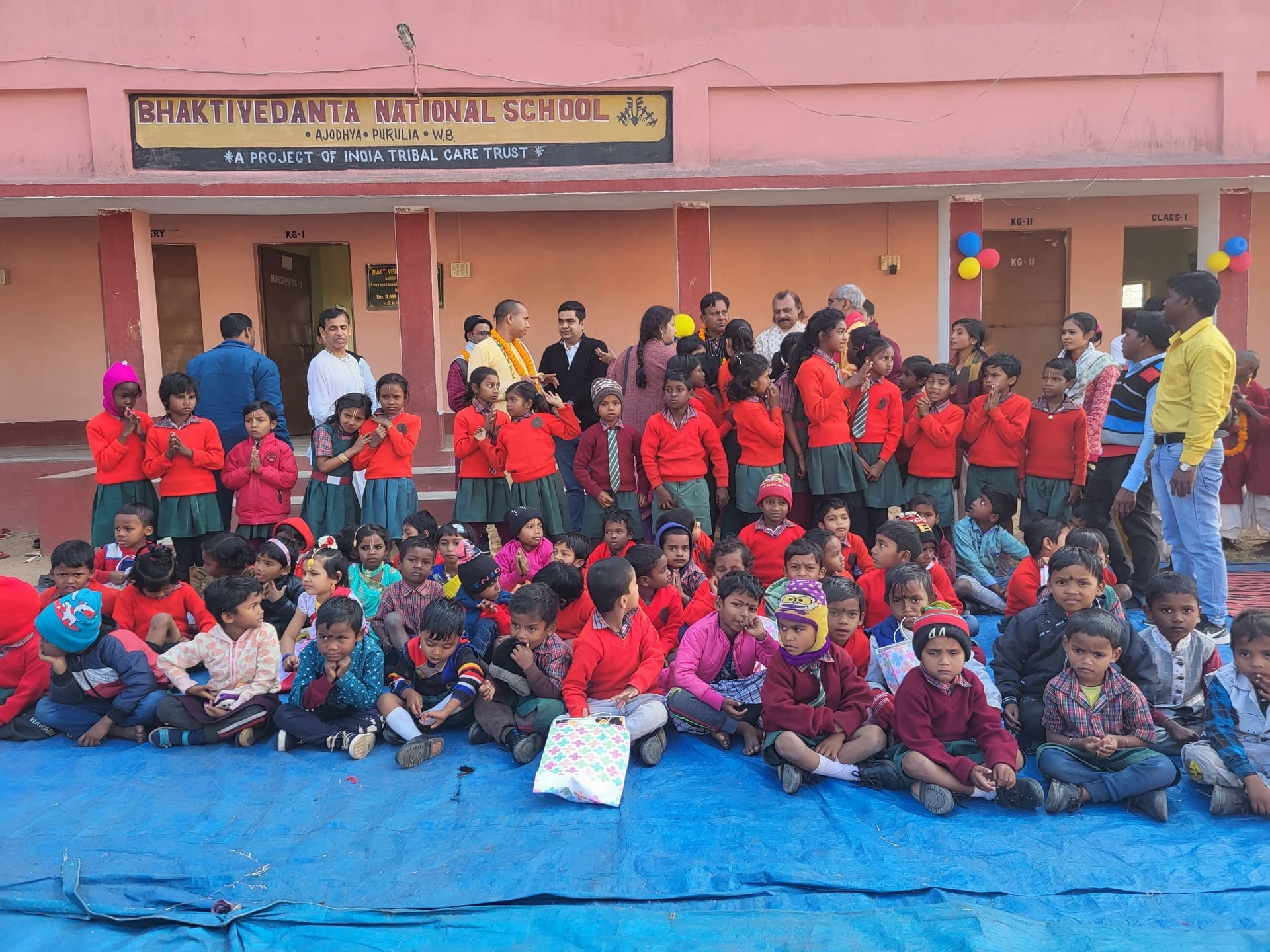
Education is the most powerful tool for breaking the intergenerational cycle of poverty, exploitation, and social exclusion. Yet, for millions of indigenous tribal children living in the deep forest hinterlands of India, quality primary education has long remained an unreachable luxury. In these isolated geographies, government primary schools are often located miles away across hazardous terrain, swollen rivers, and dense forests frequented by wild animals.
Furthermore, traditional educational systems frequently fail first-generation tribal learners. Children who speak indigenous dialects such as Santhali, Mundari, or Kurukh arrive at school only to be confronted by instruction in unfamiliar state languages, unfamiliar textbook examples, and rigid environments. Feeling alienated and unable to comprehend the lessons, over 50% of tribal children historically dropped out before completing primary school.
To bridge this educational chasm, the India Tribal Care Trust (ITCT) has established a comprehensive network of Tribal Primary Schools and Community Learning Centers (Pathshalas). By combining mother-tongue bridge instruction, child-friendly infrastructure, local tribal teachers, and holistic value-based education, ITCT is nurturing young minds and unlocking bright futures across forest hamlets.
Overcoming Barriers in Tribal Primary Education
Understanding why traditional schooling fails tribal children is essential to designing an effective, empathetic educational model:
1. The Language Barrier (Mother-Tongue Transition)
A six-year-old child who has grown up speaking only Santhali or Ho at home cannot suddenly absorb mathematics and science taught exclusively in standard Bengali, Hindi, or Assamese. ITCT solves this by recruiting local bilingual teachers who begin instruction in the child's native dialect, gradually introducing regional and English languages through songs, stories, and visual aids.2. Geographical Inaccessibility and Safety Hazards
Walking 5 to 7 kilometers each way over rocky hill trails deters young children, particularly young girls, from attending distant schools. ITCT brings education directly into the hamlet by establishing decentralized village Pathshalas within a 10-minute walk from every home.
3. Lack of Learning Resources and Parental Support
First-generation learners cannot receive homework assistance from parents who themselves never had the opportunity to attend school. ITCT schools provide after-school remedial tutoring, free textbooks, notebooks, school bags, uniforms, and stationery, ensuring every child has everything needed to succeed.The ITCT Education Model: Holistic, Child-Centric, and Culturally Rooted
ITCT's educational philosophy goes beyond rote memorization, creating a warm, joyful environment where learning is an adventure:
1. Activity-Based Learning (ABL) and Visual Tools
Classrooms are equipped with colorful charts, wooden alphabet blocks, counting beads, global maps, and pictorial storybooks. Children learn mathematical concepts through tangible objects—pebbles, leaves, and wooden blocks—making abstract ideas intuitive and enjoyable.2. Local Youth as Teachers (Shiksha Mitras)
ITCT recruits educated local tribal youth, providing them with rigorous pedagogical training, child psychology workshops, and teaching aids. Because these Shiksha Mitras belong to the same village, they understand each child's family background, speak their native language, and serve as inspiring local role models.
3. Integration of Science, Culture, and Values
Alongside standard academic subjects (Mathematics, Language, Science, and Social Studies), ITCT schools cultivate moral character, environmental stewardship, and cultural pride. Daily schedules include:- Environmental Awareness: Teaching tree planting, soil conservation, and forest protection.
- Moral & Spiritual Values: Instilling truthfulness, compassion, respect for elders, and cleanliness.
- Sports and Physical Fitness: Traditional tribal games, yoga, gymnastics, and athletics that promote physical health and team spirit.
- Digital Literacy: Introducing basic computer handling and interactive learning software to bridge the rural-urban digital divide.
Building Community Ownership: Mothers' Committees (Matri Samitis)
A school can only thrive when the local community actively participates in its governance. ITCT forms Mothers' Educational Committees (Matri Samitis) in every project village.
Composed of mothers and grandmothers, these committees meet monthly to monitor student attendance, review meal quality, organize village cleanup drives, and ensure that every school-age child in the hamlet is enrolled. When mothers take ownership of the school, absenteeism vanishes, and education becomes a shared community priority.
The Transformative Ripple Effect: Real Stories of Hope
The impact of ITCT's primary education initiative is visible in the transformed lives of thousands of young learners across eastern India:
- 100% Primary School Retention: In ITCT project villages, primary school drop-out rates have fallen to near zero.
- High Transition to Secondary Education: Over 90% of ITCT primary school graduates successfully transition to high schools and vocational boarding hostels.
- Gender Parity: Girl students account for over 50% of total enrollment in ITCT schools, empowering young women to pursue higher education and financial independence.
The Journey of Arjun Munda: From Forest Gathering to Top Student
In a remote forest settlement in West Bengal, eight-year-old Arjun Munda used to spend his days wandering the forest, collecting fallen firewood and grazing cattle. His parents had never attended school and saw no future for their son beyond manual labor.
When ITCT established a Pathshala in his village, a local teacher visited Arjun's home, reassuring his parents and enrolling Arjun in Class 1. Provided with a clean uniform, books, and daily nutritious meals, Arjun blossomed. Within two years, he mastered reading in two languages, excelled in arithmetic, and discovered a passion for geography.
Today, Arjun is the top student in his class and dreams of becoming a civil engineer to build roads and water systems for his village. "School is my favorite place," Arjun says with a glowing smile. "I want to study hard so I can make my village proud."
How You Can Illuminate a Child's Future Through Education
Every child deserves the opportunity to read, write, dream, and succeed. By supporting the Education Initiative of India Tribal Care Trust, you can sponsor the complete education of a tribal child or support a village school:
- Sponsor a Child's Annual Education: Cover tuition, uniforms, books, stationery, and daily meals for a tribal child for an entire academic year.
- Adopt a Village Pathshala: Fund the operating costs, teacher salaries, and learning materials for an entire remote village learning center.
- Gift School Supplies & Uniforms: Provide school bags, shoes, uniforms, and textbook sets for eager young learners.
- Support Digital Classrooms: Donate computers, projectors, and educational software to bring modern learning tools to forest schools.


